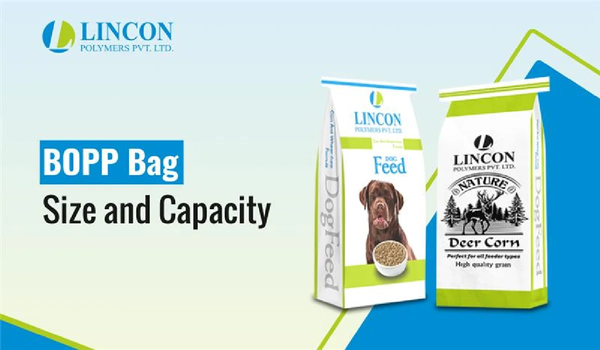
Packaging plays an important role in how products move from production to storage and finally to the market. For businesses that deal with bulk goods, selecting the right packaging makes a world of difference.
This is where the BOPP(Biaxially Oriented Polypropylene, a versatile material widely used in packaging) size and capacity become important.
It ensures that products are packed properly, stacked easily, and transported without unnecessary handling issues. When the bag capacity matches the product weight and volume, packaging becomes more efficient and consistent across the supply chain.
Industry reports estimate that the global polypropylene woven bags market could reach over USD 6.3 billion by 2035, driven largely by demand from agriculture, food distribution, and bulk product packaging industries.
If you are in one such industry and are looking for professional assistance on how to choose the right BOPP bag size for packaging, factors influencing bag capacity, and the benefits of choosing the correct BOPP bag size.
Key Highlights
Selecting the correct BOPP bag size and capacity helps improve packaging efficiency, storage, and product handling.
Different products, such as rice, flour, fertilizers, and animal feed, require different BOPP bag capacities.
Understanding product weight, density, and filling methods is essential when choosing the right BOPP bag.
Businesses can use a BOPP bag capacity guide to select the most suitable packaging size for bulk products.
BOPP laminated bags and custom BOPP bags for products support both industrial packaging needs and clear product presentation.
Understanding BOPP Bag Size and Capacity
Bag size usually refers to the width, length, and overall structure of the bag, while capacity refers to the amount of product weight the bag can hold safely. Both factors work together to ensure the product fits properly and the bag performs well during filling, storage, and transportation.
For example, a bag designed for 10 kg packaging will have different dimensions than a bag used for 25 kg or 50 kg products. If the bag is too small, it can create pressure during filling. If it is too large, the product may not stack properly or may shift during handling.
This is why many businesses follow a BOPP bag capacity guide when selecting packaging for their products. The right bag size allows smooth filling, better stacking in warehouses, and easier transport.
How to Choose the Right BOPP Bag Size and Capacity?
Selecting the correct BOPP bag size and capacity starts with understanding the product you are packaging. The right bag should hold the product comfortably, allow smooth filling, and support easy storage and transportation. When businesses choose the right bag size, packaging becomes more efficient and consistent.
Here are a few practical steps that help when choosing the right BOPP bag.
Identify the Product Weight
Start by determining how much product will go into each bag. Most BOPP bags for packaging are commonly used for capacities such as 5 kg, 10 kg, 25 kg, and 50 kg.
How to choose:
Choose 5–10 kg bags for smaller consumer packaging such as flour, seeds, or retail products.
Choose 25 kg bags for medium bulk packaging used in agriculture or food processing.
Choose 50 kg bags for heavy bulk products like fertilizers or large grain shipments.
This helps businesses select the best BOPP bag capacity for grains and fertilizers without overloading the bag.
Consider the Product Volume and Density
Products with the same weight can still require different bag sizes because of density. For example, flour occupies more space compared to rice, even at the same weight.
How to choose:
Choose slightly wider or larger bags for lighter and bulkier products such as flour or feed mixtures.
Choose standard-size bags for dense products like rice or grains.
Check the Filling Method
The packaging method also affects bag selection. Businesses using automated filling machines require bags that match machine specifications.
How to choose:
Choose standard open-mouth bags if the filling process is manual or semi-automatic.
Choose pinch bottom bags if the packaging line uses automated filling systems for faster sealing.
Many industries work with a BOPP pinch bottom bags manufacturer to ensure the bag structure supports efficient packaging operations.
Evaluate Storage and Transportation Needs
Packaging should allow easy stacking and stable handling during transport. Proper bag size helps maintain uniform stacks in warehouses and shipping containers.
How to choose:
Choose strong industrial bag sizes for products that will be stacked or transported in large quantities.
Choose structured industrial bags for bulk shipments where stability is important.
Consider Custom Packaging Requirements
Some businesses require packaging that also supports product identification and branding. In these cases, customized bag dimensions may be necessary.
How to choose:
Choose standard bag sizes if the focus is on bulk distribution and cost efficiency.
Choose custom bag sizes and designs when packaging needs to display branding or product information clearly.
Many companies prefer Custom BOPP bags for products and Printed BOPP bags for packaging to maintain a consistent and professional product presentation.
Benefits of Choosing the Correct BOPP Bag Size
Selecting the right BOPP bag size and capacity offers several practical advantages for businesses that handle bulk packaging. When the bag size matches the product requirements, packaging operations become smoother and more efficient.
Here are some key benefits of choosing the correct bag size.
Efficient Packaging Operations
When the bag size is appropriate for the product weight and volume, the filling process becomes faster and more consistent. Proper sizing reduces the chances of overfilling or underfilling, making BOPP bags for packaging easier to handle during production.
Better Storage and Stacking
Correctly sized bags allow products to stack neatly in warehouses and storage facilities. This helps businesses organize their inventory more efficiently and use available space more effectively.
Improved Handling and Transportation
Bags that match the product capacity are easier to lift, move, and transport. Many businesses rely on industrial BOPP packaging bags designed for bulk handling, which helps maintain stability during shipping and distribution.
Reduced Packaging Issues
Using the right bag size prevents unnecessary stress on the bag structure. This helps maintain the shape of the bag during filling and transportation, reducing the risk of packaging damage.
Consistent Product Presentation
For products sold in the market, the packaging appearance also matters. Properly sized Printed BOPP bags for packaging allow businesses to present product information clearly while maintaining a clean and professional look.
Choosing the correct BOPP bag size and capacity ultimately helps businesses maintain efficient packaging processes, organized storage, and reliable product handling across different industries.
Final Thoughts
Getting the size and capacity right is honestly one of those decisions that pays off quietly over time. You won't notice it when it's working, but you'll definitely notice it when it isn't.
A well-chosen bag reduces handling issues, keeps your product intact through the supply chain, and presents well at the point of sale. That's a lot of value sitting in what most people treat as a minor procurement decision.
It's also worth remembering that packaging requirements evolve. As your volumes grow or your product range expands, the bag specifications that worked at one scale may need revisiting. Building a relationship with a manufacturer who understands your product category and can adapt with you makes that process much smoother.
At Lincon Polymers, we understand that every product has its own packaging requirements. This is why we focus on providing solutions that work reliably for their products and operations.
Frequently Asked Questions(FAQs)
What size BOPP bag is best for bulk packaging?
For bulk packaging, 25 kg and 50 kg BOPP bags are commonly used. These sizes are suitable for products that are stored and transported in large quantities.
What is the BOPP bag capacity for rice, flour, and animal feed?
Rice is usually packed in 10 kg, 25 kg, or 50 kg bags, flour in 5 kg, 10 kg, or 25 kg bags, and animal feed is commonly packed in 25 kg or 50 kg bags.
What capacities are available in BOPP bags?
BOPP bags are typically available in capacities ranging from 5 kg to 50 kg, depending on the product and packaging requirements.
Why is choosing the correct BOPP bag capacity important?
Selecting the right bag capacity ensures proper filling, easier storage, stable stacking, and smoother transportation of products.
What industries commonly use BOPP bags?
Industries such as agriculture, food processing, fertilizers, animal feed, seeds, and bulk commodities commonly use BOPP bags for packaging.


Nuestros Productos
Proporcionar los productos más versátiles y avanzados bajo un mismo techo en la industria tejida

Bolsas de fondo plano de polipropileno biorientado (BOPP)
Especial para envasado de alimentos
Bolsas tejidas de polipropileno (PP) laminado con polipropileno biorientado (BOPP)
Especial para envasado de alimentos
Bolsas de papel o polipropileno
Duradero, flexible y muy resistente
Bolsas de fondo cuadrado de boca abierta y con válvula
Bolsas para uso especial

Bolsas tejidas de polipropileno (PP)
Ligeras y reciclables
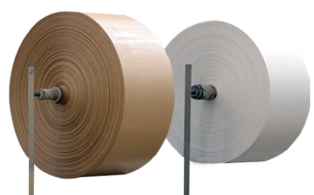
Tejidos de polipropileno (PP)
El corazón de la industria textil