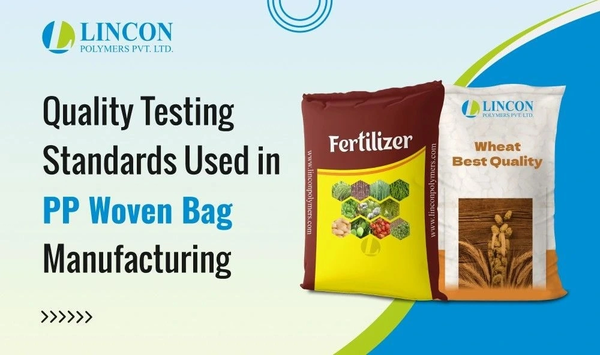
In today’s high-volume packaging applications, PP woven bags carry more than just products, they carry trust. Whether it’s rice, cement, sugar, fertilizers, or chemicals, buyers expect every bag to withstand weight, handling, stacking, and transport without failure. That’s why understanding the testing standards used in PP woven bag manufacturing is no longer optional, it’s essential.
Key Takeaways
PP woven bag testing standards ensure durability, safety, and export compliance.
Tensile, burst, seam, and drop tests are non-negotiable for quality assurance.
BIS standards for PP woven sacks define load and strength benchmarks.
Strong testing protocols add measurable value to the benefits of PP woven bags.
Why Testing Standards Matter in PP Woven Bag Manufacturing
PP woven bags are made from woven polypropylene tapes, but their performance depends on strict PP woven bag quality testing at every stage, from fabric extrusion to finished sack inspection. Without standardized testing:
Bags may fail during transport
Seam slippage can cause leakage
UV exposure can weaken bags outdoors
Food-grade compliance may be compromised
That’s why PP woven bag quality control relies on globally accepted and BIS standards for PP woven sacks, ensuring consistency across batches and suppliers.
According to industry data referenced by ISO and BIS-aligned packaging bodies, over 65% of industrial packaging failures occur due to insufficient tensile or seam strength testing, making standardized testing critical for exporters and bulk buyers.
Key Testing Standards Used in PP Woven Bag Manufacturing
Tensile Strength Test for PP Woven Bags
One of the most critical PP woven fabric testing procedures, tensile testing measures how much pulling force the fabric can withstand before breaking. This test ensures sacks can handle lifting, stacking, and transit stress.
How to test the tensile strength of PP woven bags:
Samples are clamped and pulled until rupture
Results indicate strength in warp and weft directions
Bursting & Drop Impact Test
The bursting strength test (Mullen) PP bags measures resistance to multidirectional pressure.
Uses the Mullen burst test apparatus
Indicates how much pressure the fabric withstands before rupture
Acceptable burst strength for 50 kg PP rice bags typically ranges between 5.5–7.0 kg/cm², depending on GSM and weave density, as referenced by BIS-aligned food grain packaging norms.
The drop test for woven sacks simulates real-life handling.
Bags filled to rated capacity
Dropped from defined heights
Inspected for tearing, seam failure, or leakage
This is a mandatory test under many industrial packaging testing standards PP bags.
UV Resistance & Stability
For outdoor storage, the UV resistance test for PP woven bags checks fabric degradation under accelerated UV exposure.
Prevents brittleness and discoloration
Required for fertilizers, cement, and agro-products
UV-stabilized bags can extend shelf life by 6–12 months, according to polymer testing studies referenced by ASTM-based labs.
Tear Resistance Test
The elongation at break test PP sacks measures how much the fabric stretches before tearing. This test is critical for bags used in automated filling lines. This test:
Prevents brittle fabric failures
Ensures flexibility under load
GSM Test
The GSM test for PP woven fabric checks the fabric weight per square meter. How to evaluate GSM and thickness for PP woven packaging:
Higher GSM = higher strength
Thickness must align with load rating
GSM consistency directly affects cost, strength, and compliance with woven polypropylene bag standards.
Compression Test for Filled Bags
The compression test for filled bags ensures stack stability. It is essential for warehouse stacking and containerized exports.
Bags are stacked under controlled load
Measures deformation and failure point
Seam Strength Test for Woven Sacks
Even the strongest fabric fails if seams are weak. The seam strength test for woven sacks evaluates:
Stitch quality
Thread strength
Lamination bonding (if applicable)
This test is vital for exporters sourcing from a PP Woven Bags Manufacturer for bulk shipments.
PP Woven Bags vs BOPP Bags: Do Testing Standards Differ?
While discussing PP bags vs BOPP bags, both share similar base tests like tensile, burst, and seam strength. However:
BOPP laminated bags require additional lamination adhesion tests
Print durability and gloss retention tests apply to BOPP
This transparency separates reliable suppliers from risky ones. When sourcing from a PP Woven Bags Manufacturer, ask for:
Internal lab test reports
BIS or ISO-aligned compliance documents
Batch-wise tensile and burst test data
Food-grade packaging standards certification
Conclusion
In industrial packaging, failure is expensive. That’s why manufacturers who follow strict testing standards used in PP woven bag manufacturing consistently outperform competitors. From PP woven sack testing methods to food-grade compliance, testing transforms ordinary packaging into a trusted logistics solution.
Companies like LinconPolymers Pvt Ltd exemplify how rigorous testing, documented quality control, and standard compliance build long-term buyer confidence.
Frequently Asked Questions
How are PP woven bags manufactured?
PP woven bags are made by extruding polypropylene into tapes, weaving them into fabric, and converting the fabric into bags through cutting and stitching. Quality tests are performed at each stage to meet PP woven bag testing standards.
What should I ask a supplier to provide as proof of quality?
Request tensile strength, bursting strength (Mullen), GSM, seam strength, and drop test reports. Suppliers should also provide compliance with BIS standards for PP woven sacks.
What standards define the strength requirements of PP woven sacks?
Strength requirements are defined by BIS standards such as IS 14968, IS 16208, and ISO-based tensile and burst testing protocols. These standards specify limits for load, seam strength, and elongation.
Can BOPP laminated bags follow the same testing standards as PP woven bags?
Yes, BOPP laminated bags follow the same basic PP woven sack testing methods, like tensile and drop tests. However, PP bags vs BOPP bags differ because BOPP bags require additional lamination adhesion testing.
How often should PP woven bags be tested during production?
PP woven bags should be tested for every production batch at the fabric and finished-bag levels. Regular testing ensures consistent PP woven bag quality control in high-volume packaging applications.


Our Products
Providing the most versatile and advanced products under one roof in the Woven Industry

BOPP Pinch Bottom Bags
Specially for Food Packaging

BOPP Laminated PP Woven Bags
Specially for Food Packaging
Paper / Poly Bags
Durable, Flexible, and Extra Strengthy
Block Bottom - Open Mouth & Valve Bags
Special Purpose Bags

PP Woven Bags
Light Weight and Recyclable
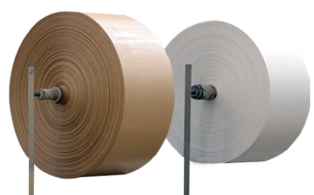
PP Woven Fabrics
The Heart of Woven Industry